

Secrets of Auto Repair Success with Jimmy Purdy
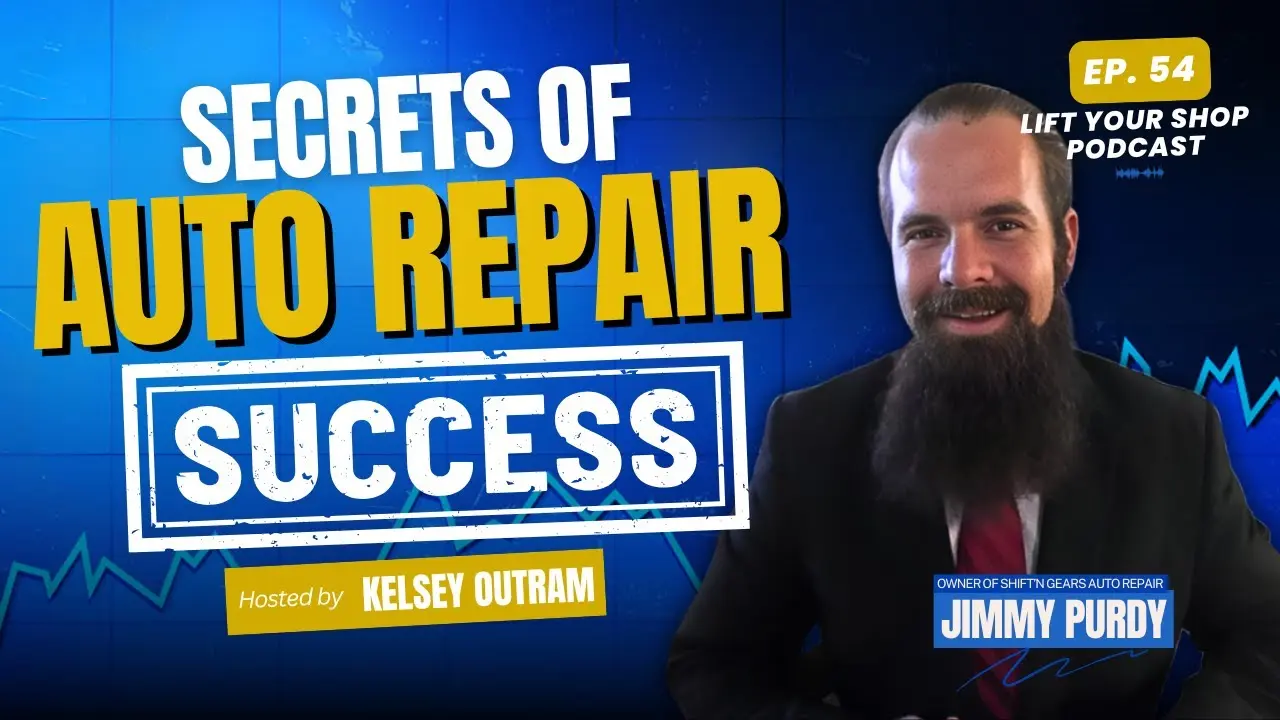
When it comes to running an auto repair shop, the temptation to cut costs and discount services is real. Many business owners mistakenly think that offering the lowest prices is the key to attracting customers. However, this approach can often backfire. As Jimmy Purdy, the owner of Shift’N Gears Auto Repair in Paso Robles, California, and host of The Gearbox Podcast, points out, the key to long-term success is not just about offering cheap services but about building a strong, sustainable business that supports employees, invests in the community, and reflects the quality of work being done.
“If you’re doing everything cheap, you’re not providing a good life for the people that work for you,” Jimmy says. “You’re not going to have the money to sponsor community events or make the impact you want to.” This mindset highlights a crucial aspect of building a business that can thrive: charging appropriately for the work you do.
The Real Cost of Discounting Services
It’s easy to think that lowering prices will bring in more customers, but this is a misconception. When you underprice your services, you limit your ability to cover overhead costs, invest in tools, training, or pay fair wages to your employees. In the long term, this model is unsustainable. As Jimmy shares, “You have to learn how to do it without just flat-out ripping people off. There’s a balance—you’re not trying to slaughter the sheep, but you’re also not going to shear it too much.”
Finding the balance between competitive pricing and sustaining your business is key. Understanding the value of your services and the real costs behind your operations is the foundation of any successful auto repair shop.
The Learning Curve of Business Numbers
In the beginning, it can feel overwhelming to understand the financials that drive your business. Many shop owners price based on gut feeling, rather than analyzing the actual costs involved. Jimmy recalls his early days: “I had 5,000 in the bank, but I still had rent, equipment payments, and employee salaries to manage.” What seems like a big win—such as a $5,000 transmission job—can quickly turn into a realization that after expenses, the profit is much smaller than expected. This lesson emphasizes the importance of understanding your numbers—not just how much you’re charging, but how much it truly costs to run your shop.
As you grow in your understanding of business finances, your confidence will grow too. Watching your bank account grow as you manage costs and increase sales is the rewarding part of the learning process.
When Jimmy first opened Shift’N Gears, he was laser-focused on transmissions. “I wanted to be the best in that niche,” he says, referring to the complex and often misunderstood world of transmissions. However, as the business grew, so did the needs of his customers. He realized that by hiring skilled employees to handle basic services, like oil changes and brake work, he could expand his offerings to become a more versatile, full-service shop.
This transition was a pivotal moment for Shift’N Gears. “We had to change our processes and adapt quickly,” Jimmy recalls. Shifting gears doesn’t just apply to the vehicles Jimmy fixes—it’s also about adapting to market demands and evolving to meet the needs of your customers.
Branding, Building, and Becoming a Leader
The name of your business can be more powerful than you realize. When Jimmy first chose the name “Shift’N Gears,” he wasn’t sure if it would confuse potential customers, especially given the local motorcycle shop with a similar name. However, as time passed, Jimmy realized that the name had grown into a symbol of something much bigger. “Now, ‘Shift’N Gears’ has become synonymous with auto repair, and that’s exactly what we do.”
Sometimes, it’s not about changing your name or rebranding. The real power comes from staying consistent, delivering excellent service, and building trust within your community.
Shift’N Gears has come a long way from its humble beginnings. After relocating to a new, larger space, the business continued to grow, leading to the recent addition of a second building. “We’ve just signed a lease for a second building across the street. This new space will give us another 4,000 square feet to work with.”
The new space not only provides more room to grow, but it also allows Jimmy to optimize the shop’s layout for better workflow and customer service. Despite the challenges, expanding into a new facility has been an incredible opportunity for the business.
In the early days of running the shop, Jimmy struggled with leadership. He expected his team to share the same level of commitment he had, only to realize that not everyone worked the same way. “It wasn’t that the team didn’t care—it’s just that they didn’t operate at the same intensity that I did,” Jimmy reflects.
This was a crucial learning moment for Jimmy. As a leader, it was important to adapt his expectations and find ways to motivate his team. Today, he knows that leadership isn’t just about telling people what to do—it’s about teaching them, supporting them, and understanding their unique approaches to work.
Survival to Strategy
For years, marketing wasn’t a priority for Jimmy. His focus was solely on managing the daily demands of running the shop—keeping up with repairs, handling customer concerns, and ensuring the business stayed afloat. Like many small business owners, he saw marketing as an optional expense rather than a necessity. However, as time went on, he began to notice the challenges of inconsistent customer flow and unpredictable revenue.
“Marketing wasn’t a luxury—it was essential,” Jimmy reflects. It wasn’t until he faced a personal tragedy that he took a step back and reassessed the shop’s future. He realized that without a structured plan, the business would continue to operate reactively instead of proactively. This turning point led him to develop a clear marketing strategy—one that focused on setting achievable revenue goals, increasing brand awareness, and creating a long-term vision for growth. By embracing a strategic approach, Jimmy transformed his shop from merely surviving to thriving.
Lessons Learned in Business and Beyond
From understanding pricing to shifting gears in the auto industry, Jimmy Purdy’s journey with Shift’N Gears teaches us valuable lessons on what it takes to build a successful auto repair business. It’s not just about being the cheapest or sticking to one niche. It’s about building a brand, investing in your team, setting boundaries, and most importantly, adapting to the changing needs of your customers. With the right balance of pricing, leadership, and marketing, your shop can shift gears toward greater success.
Stay Connected: Find Jimmy on Facebook or on The Gearbox Podcast, available on Spotify and Apple Podcasts.